Jan 15, 2016

Recent DPRK Nuclear Test Analysis gets quoted


DPRK Nuclear Test Report Cover
The recent ISSSP, NIAS report of the DPRK Nuclear Test conducted on January 6, 2016 has been quoted by NK News, Council for Foreign Relations and by the Rising Powers Initiative of the George Washington University (GWU). 

Read NK News story here

Read Council on Foreign Relations (CFR) article here

Read Policy Alert by Rising Powers Initiative, George Washington University read here
Share:

Jan 11, 2016

North Korea’s 2016 Nuclear Test: An Analysis


Authors: Arun Vishwanathan, S. Chandrashekar, L.V. Krishnan and Lalitha Sundaresan

Published as ISSSP Report 01-2016, January 10, 2015 

DPRK Nuclear Test Report CoverOn January 6, 2016, two days short of Kim JongUn’s birthday, the Democratic Peoples’ Republic of Korea (DPRK) conducted its fourth nuclear test. The test took place at 10:30 AM Local Time (01:30:00 UTC). An analysis of the seismic data from the test, clearly points to the fact that the earthquake (with a magnitude of 4.85 on the Richter scale) was the result of a nuclear test and not due to a natural earthquake. North Korea released a statement following the test which claimed that it had conducted a nuclear test and had exploded its first H-bomb.
North Korea has conducted four nuclear tests in 2006, 2009, 2013 and 2016. the first test in October 2006 with a yield of ~1kT was a fizzle. This was followed by the second test in May 2009. Though there are differences over the exact yield of the test with estimates ranging from 2.4 kT to 5 kT it is considered to be a success. The third test in February 2013 had a yield around 10 kT.
To read the complete report click here
To cite: Arun Vishwanathan, S. Chandrashekar, L.V. Krishnan and Lalitha Sundaresan. North Korea’s 2016 Nuclear Test: An Analysis. ISSSP Report No. 1-2016. Bangalore: International Strategic and Security Studies Programme, National Institute of Advanced Studies, January 10, 2016 available athttp://isssp.in/north-koreas-2016-nuclear-test-an-analysis/
Share:

Dec 11, 2015

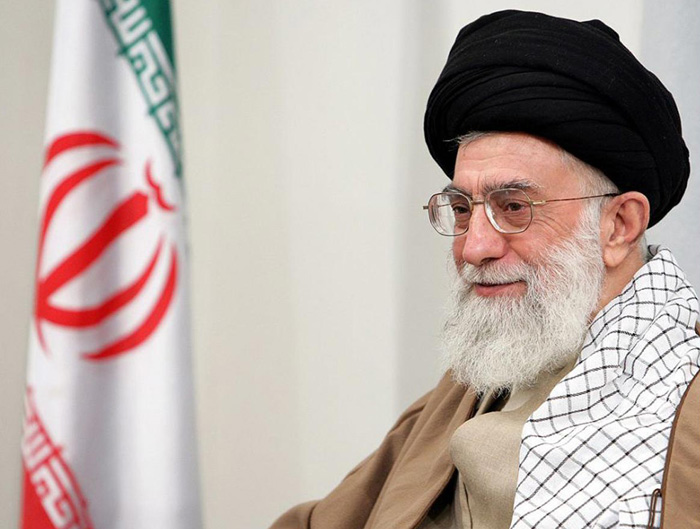
The Iranian nuclear fatwa that never was

Published as ISSSP Reflections, December 11, 2015
available at 
http://isssp.in/the-iranian-nuclear-fatwa-that-never-was/

In the past, whenever doubts arose about the intentions of Iran’s nuclear program, the Iranian regime has been quick to point to the Supreme Leader Ayatollah Ali Khomenei’s fatwa (pg. 121) (decree) as a guarantee of Iran’s resolve not to pursue nuclear weapons. Many Iranian leaders like former head of the Iranian judiciary, Ayatollah Amoli Larijani have quoted the Supreme Leader’s fatwa to reiterate any lack of interest in pursuing nuclear weapons. In an interview with Gareth Porter of Foreign Policy, former IRGC minister and head of the Supreme Leaders’ security detail, Mohsen Rafighdoost, stated that the Supreme Leader had described nuclear weapons as haram and proscribed building nuclear or chemical weapons even in face of attacks on Iranian cities with chemical weapons. In fact Iran’s then foreign minister, Ali Akbar Salehi had suggested (pg 40) that Iran could made the fatwa ‘a legally binding official document in the UN.’ However, nothing much came out of it.

Despite these strident claims from the Iranian side, there have been doubts – much to Iran’s chargin – about the fatwa and the role it will play in reining in the Iranian pursuit of a nuclear weapons program. One of the reasons for these persistent doubts is that the fatwa has never been actually published. In addition, as Ariane Tabatabai writes, “The scope of this prohibition remains unclear, as some of his statements point at a more comprehensive ban, including on the “production, stockpiling, and use” of such weapons, while others merely encompass their “use.”

To read the complete article click here
Share:

Jul 2, 2015

India gets the message all wrong after Myanmar foray

Security Forces conducting operations
Copyright: The Statesman
Recent events along the Indo–Myanmar border have proven that India’s Narendra Modi government has a different playbook when it comes to pro-active responses against groups that harm Indian national interests.

On 4 June, the Indian Army suffered its worst casualties in almost a decade when 18 soldiers were killed and 14 injured in an attack by insurgents belonging to the National Socialist Council of Nagaland’s Khaplang faction (NSCN-K) in Chandel district, Manipur. The Indian government was quick to respond by launching a special forces operation in the early hours of 9 June. Operation Peace led to attacks on insurgent camps belonging to the NSCN-K.

This article was published in the website of the East Asia Forum on July 2, 2015
For the rest of the article click here 
Share:

Jun 11, 2015

International Relations: What, Why and How?

I was invited to deliver an Orientation Lecture to the students of the M.A. International Relations (First Year), Christ University, Bangalore on June 11, 2015.

The talk introduced the students to the theoretical debates in the discipline. It provided a brief introduction to research methodology and important concepts in the field of International Relations. 


Share:

Jun 10, 2015

Inside the Pakistan Army: Moves on the Chessboard


On April 9, 2015, Pakistan’s Inter Services Public Relations (ISPR) put out two short press releases. The two-line press releases gave the names of the officers promoted from the rank of Maj. General to Lt. General and details of key new postings. This was the second major reshuffle that has taken place in the higher echelons of the Pakistan Army after General Raheel Sharif took over as the 15th Chief of the Pakistan Army in November 2013. The article examines the recent appointments within the Pakistan Army and analyses the changes that have occurred under current Army Chief Raheel Sharif. Specifically, the possible changes have occurred within the Strategic Plans Division are assessed and predictions on the possible choices for the next Army Chief made.This article was published on the Generation Why website, South Asian Voices, Stimson Center, June 5, 2015. It was co-authored with Ms. Ramya P.S, Junior Research Fellow, NIAS
 
To read the complete article click here
Share: