Jan 18, 2016

Maharashtra Times - Aftermath of North Korea's Nuclear Test

Published in Maharashtra Times, January 17, 2016

Available at http://epaperbeta.timesofindia.com/Article.aspx?eid=31835&articlexml=17012016014007
Source: Egyptian Streets Website
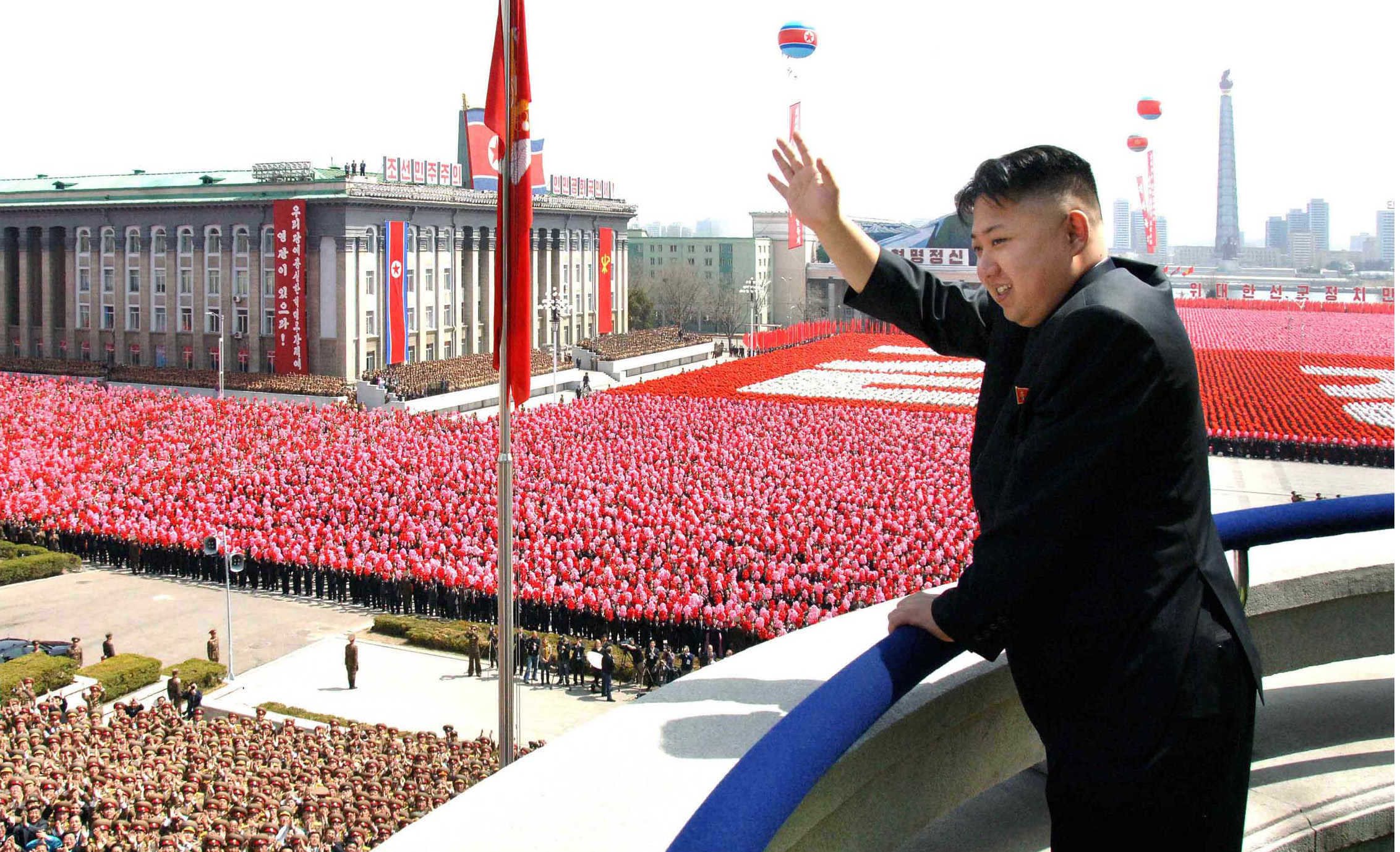
I wrote an op-ed article in Maharashtra Times on the recent (Jan 6, 2016) North Korean nuclear test. The article analysed the whether the North Korean claim that they had tested a thermonuclear weapon was plausible. It also discussed North Korean and Pakistani nuclear and missile linkages and its implications for India. 

To read the complete article click here

Share:

Jan 15, 2016

Recent DPRK Nuclear Test Analysis gets quoted


DPRK Nuclear Test Report Cover
The recent ISSSP, NIAS report of the DPRK Nuclear Test conducted on January 6, 2016 has been quoted by NK News, Council for Foreign Relations and by the Rising Powers Initiative of the George Washington University (GWU). 

Read NK News story here

Read Council on Foreign Relations (CFR) article here

Read Policy Alert by Rising Powers Initiative, George Washington University read here
Share:

Jan 11, 2016

North Korea’s 2016 Nuclear Test: An Analysis


Authors: Arun Vishwanathan, S. Chandrashekar, L.V. Krishnan and Lalitha Sundaresan

Published as ISSSP Report 01-2016, January 10, 2015 

DPRK Nuclear Test Report CoverOn January 6, 2016, two days short of Kim JongUn’s birthday, the Democratic Peoples’ Republic of Korea (DPRK) conducted its fourth nuclear test. The test took place at 10:30 AM Local Time (01:30:00 UTC). An analysis of the seismic data from the test, clearly points to the fact that the earthquake (with a magnitude of 4.85 on the Richter scale) was the result of a nuclear test and not due to a natural earthquake. North Korea released a statement following the test which claimed that it had conducted a nuclear test and had exploded its first H-bomb.
North Korea has conducted four nuclear tests in 2006, 2009, 2013 and 2016. the first test in October 2006 with a yield of ~1kT was a fizzle. This was followed by the second test in May 2009. Though there are differences over the exact yield of the test with estimates ranging from 2.4 kT to 5 kT it is considered to be a success. The third test in February 2013 had a yield around 10 kT.
To read the complete report click here
To cite: Arun Vishwanathan, S. Chandrashekar, L.V. Krishnan and Lalitha Sundaresan. North Korea’s 2016 Nuclear Test: An Analysis. ISSSP Report No. 1-2016. Bangalore: International Strategic and Security Studies Programme, National Institute of Advanced Studies, January 10, 2016 available athttp://isssp.in/north-koreas-2016-nuclear-test-an-analysis/
Share:

Dec 11, 2015

The Iranian nuclear fatwa that never was

Published as ISSSP Reflections, December 11, 2015
available at 
http://isssp.in/the-iranian-nuclear-fatwa-that-never-was/

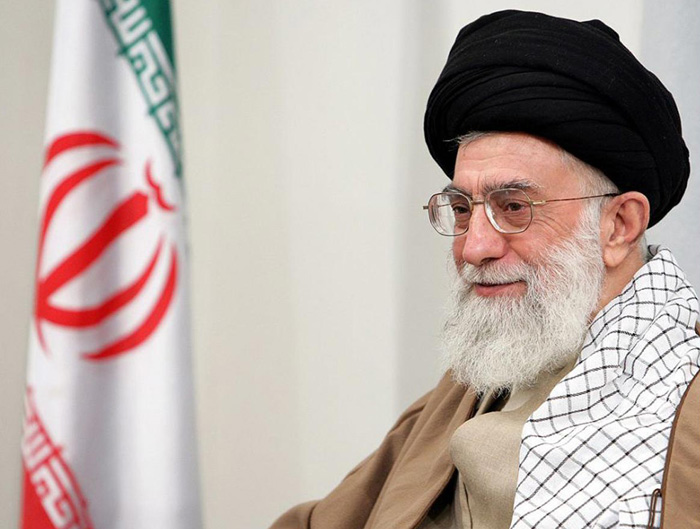
In the past, whenever doubts arose about the intentions of Iran’s nuclear program, the Iranian regime has been quick to point to the Supreme Leader Ayatollah Ali Khomenei’s fatwa (pg. 121) (decree) as a guarantee of Iran’s resolve not to pursue nuclear weapons. Many Iranian leaders like former head of the Iranian judiciary, Ayatollah Amoli Larijani have quoted the Supreme Leader’s fatwa to reiterate any lack of interest in pursuing nuclear weapons. In an interview with Gareth Porter of Foreign Policy, former IRGC minister and head of the Supreme Leaders’ security detail, Mohsen Rafighdoost, stated that the Supreme Leader had described nuclear weapons as haram and proscribed building nuclear or chemical weapons even in face of attacks on Iranian cities with chemical weapons. In fact Iran’s then foreign minister, Ali Akbar Salehi had suggested (pg 40) that Iran could made the fatwa ‘a legally binding official document in the UN.’ However, nothing much came out of it.

Despite these strident claims from the Iranian side, there have been doubts – much to Iran’s chargin – about the fatwa and the role it will play in reining in the Iranian pursuit of a nuclear weapons program. One of the reasons for these persistent doubts is that the fatwa has never been actually published. In addition, as Ariane Tabatabai writes, “The scope of this prohibition remains unclear, as some of his statements point at a more comprehensive ban, including on the “production, stockpiling, and use” of such weapons, while others merely encompass their “use.”

To read the complete article click here
Share:

Jul 2, 2015

India gets the message all wrong after Myanmar foray

Security Forces conducting operations
Copyright: The Statesman
Recent events along the Indo–Myanmar border have proven that India’s Narendra Modi government has a different playbook when it comes to pro-active responses against groups that harm Indian national interests.

On 4 June, the Indian Army suffered its worst casualties in almost a decade when 18 soldiers were killed and 14 injured in an attack by insurgents belonging to the National Socialist Council of Nagaland’s Khaplang faction (NSCN-K) in Chandel district, Manipur. The Indian government was quick to respond by launching a special forces operation in the early hours of 9 June. Operation Peace led to attacks on insurgent camps belonging to the NSCN-K.

This article was published in the website of the East Asia Forum on July 2, 2015
For the rest of the article click here 
Share:

Jun 11, 2015

International Relations: What, Why and How?

I was invited to deliver an Orientation Lecture to the students of the M.A. International Relations (First Year), Christ University, Bangalore on June 11, 2015.

The talk introduced the students to the theoretical debates in the discipline. It provided a brief introduction to research methodology and important concepts in the field of International Relations. 


Share:

Jun 10, 2015

Inside the Pakistan Army: Moves on the Chessboard


On April 9, 2015, Pakistan’s Inter Services Public Relations (ISPR) put out two short press releases. The two-line press releases gave the names of the officers promoted from the rank of Maj. General to Lt. General and details of key new postings. This was the second major reshuffle that has taken place in the higher echelons of the Pakistan Army after General Raheel Sharif took over as the 15th Chief of the Pakistan Army in November 2013. The article examines the recent appointments within the Pakistan Army and analyses the changes that have occurred under current Army Chief Raheel Sharif. Specifically, the possible changes have occurred within the Strategic Plans Division are assessed and predictions on the possible choices for the next Army Chief made.This article was published on the Generation Why website, South Asian Voices, Stimson Center, June 5, 2015. It was co-authored with Ms. Ramya P.S, Junior Research Fellow, NIAS
 
To read the complete article click here
Share:

May 19, 2015

Space and Arms Control

International Conference on “India’s Perspectives on Arms Control and Disarmament: Seeking Security through Cooperation”, May 18-20, 2015, Indian Institute of Advanced Study, Shimla

Arun Vishwanathan, Assistant Professor, International Strategic and Security Studies Programme, NIAS

Group Photo of Conference Speakers at IIAS, Shimla
The conference sought to assess the Indian approach to nuclear disarmament and global arms control issues and also to explore how India should move forward, if there is a need for a new approach or if the country needs to expend more effort.
The focus of the conference was on four important trends and developments during the last decade. First, global politics and the contemporary prospects for nuclear disarmament; secondly, prospects and consequences of further nuclear proliferation, especially the likelihood that the world may be entering a New Nuclear Age; thirdly, multilateralism and disarmament politics and fourthly, new issues in arms control, specifically cyber security and Outer Space.
Dr. Arun Vishwanathan, Assistant Professor, National Institute Advanced Studies spoke on prospects of Arms Control efforts in light of reliance on space based assets for offensive and defensive platforms and the fact that separation between such systems is artificial at best.
Share:

May 5, 2015

Nuclear Dynamics in Southern Asia

Nuclear Dynamics in Southern Asia: China, India and Pakistan
Prof S Chandrashekar & Dr Arun Vishwanathan (NIAS, Bangalore)

I and Prof. Chandrashekar delivered a lecture at the NIAS-IPCS Young Scholars Workshop at the NIAS, Bangalore on "Nuclear Dynamics in Southern Asia" on May 5, 2015. This presentation looked at the trilateral nuclear relationship between India, China and Pakistan. The lecture analysed the evolving Chinese nuclear and missile capabilities and its influence on Chinese nuclear strategy and thinking.

Share:

Mar 30, 2015

Nuclearisation of South Asia: Implications for India’s National Security

Nuclearisation of South Asia: Implications for India’s National Security, Jawaharlal Nehru University, March 27, 2015

ICSSR JNUI presented a paper on te Evolution of Missile Technologies in India along with Prof Rajaram Nagappa at the Center for International Politics, Organisation and Disarmament, School of International Studies, Jawaharlal Nehru University. This was part of an authors’ conference for an Indian Council for Social Science Research (ICSSR) project titled “Nuclearisation of South Asia: Implications for India’s National Security” on March 27, 2015. 
Members of the ISSSP, NIAS presented two papers at the conference. LV Krishnan presented his paper on Evolution of Strategic Nuclear Technologies in India. Rajaram Nagappa and Arun Vishwanathan presented their paper on Evolution of Missile Technologies in India. The papers will be published as part of a forthcoming edited book. 
Share:

Oct 19, 2014

Reminisces of the 13th RCSS Summer Workshop


ISSSP Reflections No. 22, October 14, 2014

Author: Dr. Arun Vishwanathan

RCSS Group Photo
The Regional Center for Strategic Studies (RCSS), Colombo launched the Summer Workshop Series in a bid to bring together young Indian, Pakistani and Chinese scholars in 1993. The Workshop was held regularly on an annual basis till 2006 when it was discontinued due to funding issues. Recently, RCSS led by its Executive Director, Dr. Mallika Joseph was successful in garnering funds for organising the 13th Summer Workshop (September 15-25, 2014) at Kalutara, Sri Lanka (~40kms from Colombo). The theme of the Workshop was “Nuclear Disarmament, Safety and Stability.” I was fortunate to be selected to participate in the Workshop which brought together thirty odd young scholars from India, Pakistan, China and the US for an intensive ten-day fully residential workshop.

The workshop is probably the only of its kind as it brings together young scholars from India, Pakistan and China for a decent length of time. The fact that the organisers house participants from different countries in a room on twin-sharing basis and provide opportunities for joint activities and presentations, leads to fostering of friendships and understanding of the others’ point of view. Given the intertwined histories and security challenges the region faces, one cannot but emphasise the importance of such endeavours and lament at the fact that occasions for such interactions – especially for young researchers – are too few and far between.

Share:

Jul 30, 2014

Commentary: Pakistan’s Nasr/Hatf-IX Missile: Challenges for Indo-Pak Deterrence

My article in the Strategic Analysis, Vol. 34(4), July 2014 pp. 444-448 on Pakistan’s Nasr/Hatf-IX Missile: Challenges for Indo-Pak Deterrence

http://www.tandfonline.com/eprint/fR7pGKkY8tYPsW6KRZtW/full

strat analysisOn November 5, 2013 Pakistan conducted its fourth test of the Hatf-IX (Nasr) short range battlefield ‘nuclear’ missile. To date there have been four flight tests of the missile system. After the first three tests (April 19, 2011, May 29, 2012 and February 11, 2013) Pakistan’s Inter Services Public Relations (ISPR) had put out identical press releases. These statements claimed that the missile had a range of 60km and carried ‘nuclear warheads (sic) of appropriate yield’. The ISPR statement following the fourth flight test of Nasr, a salvo firing of four missiles, was worded differently and did not repeat the claim that Nasr carried a nuclear warhead. Curiously, it referred to the missile’s nuclear capability in a roundabout sort of way. The statement claimed that the missile ‘contributes to the full spectrum deterrence against threats in view of evolving scenarios’.

This then begets three questions. Firstly, what is Pakistan trying to signal by way of the Nasr and what is the significance of the change in wording of the ISPR statement following the fourth Nasr test flight? Secondly, can Pakistan actually fit a nuclear warhead into the Nasr? Thirdly, how credible would Nasr be in Indian eyes and how will it impact the Indo-Pak deterrence relationship.
For the complete article click here
To download the entire text (PDF) click here
Share:

Jun 30, 2014

Revamping India’s National Security Structure: An Agenda for the Indian Government

My report on Revamping India’s National Security Structure | An Agenda for the Indian Government, from the International Strategic and Security Studies Programme, NIAS, Bangalore, June 2014.

http://isssp.in/revamping-indias-national-security-structure-agenda-for-the-indian-government/

To read the complete report in pdf click here
Revamping India s National Security Structure-CoverThe 2014 elections for the Sixteenth Lok Sabha saw the Indian electorate delivering a positive, decisive mandate to a single party after a gap of almost three decades. An important area which is in need for urgent attention from the Narendra Modi-government is India’s national security structure. Despite past efforts at reform, India’s national security structure continues to be plagued by absence of coordination, turf battles and paucity of human resources. Many of these problems are symptomatic of systemic ills which therefore require a holistic relook.

In order for India to achieve its national interests it should be able to work in a coordinated fashion. This necessitates a holistic revamping of the existing national security apparatus and its workings. Putting in place a mechanism that develops long-term strategies and coordinates their execution is imperative as is and strengthening the National Security Advisor’s (NSA’s) support structure. In addition, such a revamp should also include reforms to the existing higher defence organisation and intelligence setup. This report will flag some of the important issues the incoming government needs to focus on in order to strengthen India’s national security architecture.
Need for a National Strategy
A national strategy is important for planning India’s economic trajectory, shaping the country’s foreign relations, planning its defence modernisation, improving its science and technology capabilities, resource planning, internal security and other such critical areas. Such a strategy would chalk out Indian priorities as a function of India’s aspirations, security challenges and available resources.
Strategic Think-Tank and Coordinating Mechanism
The National Security Council Secretariat (NSCS) could be tasked with drawing up holistic medium to long-term strategies in various areas. The NSCS could also act as a coordinating mechanism which implements these strategies by bringing together various departments and ministries of the government.
Strengthen the NSA’s Support Structure
The National Security Advisor (NSA) is the fulcrum around which the NSC system operates. The NSA’s role has expanded over time. Thus it is important to expand the NSA’s core support structure. Also, for the NSA and the NSC system to be able to function effectively it must be able to draw upon and assimilate knowledge from multiple sources into a cogent national strategy.
Reforming the Higher Defence Organisation
A decision on the position of the Chief of Defence Staff (CDS) is long overdue. The Chief of Defence Staff – regardless of what we choose to call the office – will foster inter-Service coordination in planning, execution of operations and in the force planning process. The system will ensure faster decision making during crises and provide a platform for inter-Service dispute resolution. Implementation of the system must address the drawbacks of the current system and evolve a purely ‘Indian’ solution keeping in mind the Indian situation and requirements.
Where to Begin?
The 2001 GoM Report on “Reforming the National Security System in pursuance of Kargil Review Committee Report” had recommended a comprehensive review of India’s national security mechanisms every five years. The exercise of revamping the existing National Security structure could be initiated with such a review.
Share:

Jun 6, 2014

Arihant propels India to elite club


I was quoted in Praveen Swami's article in The Hindu (June 4, 2014)
http://www.thehindu.com/news/national/arihant-propels-india-to-elite-club-but-with-a-headache/article6079477.ece

The HinduI was quoted in Praveen Swami’s article (June 4, 2014) in The Hindu titled “Arihant propels India to elite club.” Prime Minister Modi was briefed last week on the nuclear command structure. As India is set to join a select group of nations with the capability to launch nuclear missiles from submarines, the article focuses on the issues of command and control such a development would pose. 

For the entire link click here
Share:

Jun 4, 2014

India Pakistan Relations: Two Questions on the Way Forward – Part II

Second of my two-part article in the  Stimson Center's website, South Asian Voices, June 2, 2014
http://southasianvoices.org/india-pakistan-relations-two-questions-on-the-way-forward-part-ii/

Despite the agreement on the need for the two countries to engage with each other, there is a difficult question that remains unanswered. The more important and possibly more difficult question is “Who does India speak to within Pakistan?” Does it seek to engage the civilian leadership in Islamabad or should it accept the ground reality and engage with the real center of power in Rawalpindi?

The choice is not a simple one. Engaging with the generals would mean reinforcing the commonly held perception and result in the weakening of the elected civilian leadership. In the longer run, the move could prove counterproductive given the impact that it will have on the democratic forces which are consolidating their base following the recent elections.
For the complete article click here
Share:

Jun 1, 2014

India Pakistan Relations: Two Questions on the Way Forward – Part I

My two-part article in the Stimson Center's website, South Asian Voices, May 29, 2014

http://southasianvoices.org/india-pakistan-relations-two-question-on-the-way-forward-part-i/


There has been a buzz surrounding India-Pakistan relations in recent weeks. The decision of the Narendra Modi government to invite all heads of governments of all SAARC countries and Mauritius to the swearing-in ceremony was seen by many as a positive step. It was as if the incoming Prime Minister had read the words “All the world’s a stage,” in Shakespeare’s As You Like It and had taken it to heart. Many in India felt that by extending the invitation, India had seized the initiative rather than responding to an existing situation, crisis. 

While I was following these developments, two questions kept coming back to my mind. First, Why should India continue to engage Pakistan and what does it seek to gain from such an engagement. Second, who should India engage with in Pakistan?
For the complete article click here
Share:

May 30, 2014

Troubling Tehran listed in Iran Review Website

My co-ed book (with Rajaram Nagappa) Troubling Tehran: Reflections on Geopolitics listed on the Iran Review Website.
 
The leading website studying Iranian developments (Iran Review) has listed ISSSP’s book Troubling Tehran: Reflections on Geopolitics. The book joins a select list of publications that the website has shortlisted based on their focus on Iran. 

What is the best approach for resolving differences over the Iranian nuclear programme and preventing a conflict? How would a conflict possibly unravel given Iranian military, asymmetric and missile capabilities? What does a military conflict over Iran mean for international order and India in particular? These are some of the questions that the book, Troubling Tehran: Reflections on Geopolitics analyses and seeks answers to.
The book can be bought from Flipkart | Bookadda | Amazon | Amazon India
For more details on the book click here
Share:

May 20, 2014

Troubling Tehran - Book Review


Review of my co-edited book, Troubling Tehran: Reflections on Geopolitics in IDSA's Strategic Analysis Vol. 38, No. 4, May 2014, pp. 376-378 by Ms. Aditi Malhotra, Senior Research Fellow, National Institute of Advanced Studies

strat analysisThe ever dynamic nuclear conundrum of Iran has continued to hog the limelight. Numerous suggestions emanating from varied quarters about how to manage the issue have dominated the ongoing international discourse. However, there is no unanimity on how to cope with the current situation and the impending future. 

Surprisingly, in the Indian context, where Iran’s importance is undeniable, the debates have remained limited and incomprehensive. Troubling Tehran is a book that seeks to address this lacuna and trigger an Indian cogitation on Iran and the prognosis.
For the complete book review click here
The book can be bought from Flipkart | Bookadda | Amazon | Amazon India
Share:

Apr 11, 2014

Iran and P5+1 Geneva Agreement: A Game Changer?


My article on the Iran P5+1 Joint plan of action and its wider ramifications in The Diplomatist, Vol. 3, Issue 3, March 2014.

diplomatist coverThe interim agreement signed on November 24, 2013 at Geneva by Iran and the P5+1 and its subsequent operationalisation (January 20, 2014) highlights a remarkable shift the situation surrounding Iran has undergone over the past few months. The agreement is being perceived as a major departure in American policy towards Iran and the region in general. However, close observers would be quick in pointing out that such a shift has been some time in the making. The US move to enter into a dialogue with Tehran has largely been the result of a desire to buy more time to address the concerns regarding Iran’s nuclear programme through verification and roll back any probable progress Iran has made in building a nuclear weapon.
The deal also underscores the US’s endeavour to balance its efforts to push back Tehran’s regional rise on one hand,and build bridges of some kind after a hiatus of over three decades on the other. Taking a bird’s eye-view of the overall geo-political scenario, the move stems from the growing dissonance between US and its allies (Saudi Arabia and Israel) on major issues like the Israel-Palestine conflict, Syrian civil war and chemical weapons issue, as well as the handling of the Arab Spring aftermath.
For the complete article (in PDF) click here
Share:

Apr 5, 2014

Verification and Nuclear Weapons Free World

Spoke at the IDSA, New Delhi on April 2, 2014 on "Verifying a Nuclear Weapons Free World"

I spoke at the conference on the topic “Verifying a Nuclear Weapons Free World: Political and Technical Components.” 
 
About the Conference
The conference was organised by the Institute for Defence Studies and Analyses (IDSA) and the Indian Pugwash Society, on April 2-3, 2014.

For the agenda of the conference click here

Abstract of the Talk
A world free of nuclear weapons would be a desirable end-objective. However, there are apprehensions that even if all nuclear weapons are eliminated, such an achievement would be short lived. This presentation seeks to outline the components (political and technical) of such a verification regime which could possibly help in preventing (re)acquisition of nuclear weapons capability. By increasing confidence levels among state parties about compliance by all, verification would in essence sustain a nuclear weapons free world once such a situation is realised.

Video of my talk at the Conference

Share: